
The Ultimate Guide to Surface Treatment Methods
Aug 25,2025
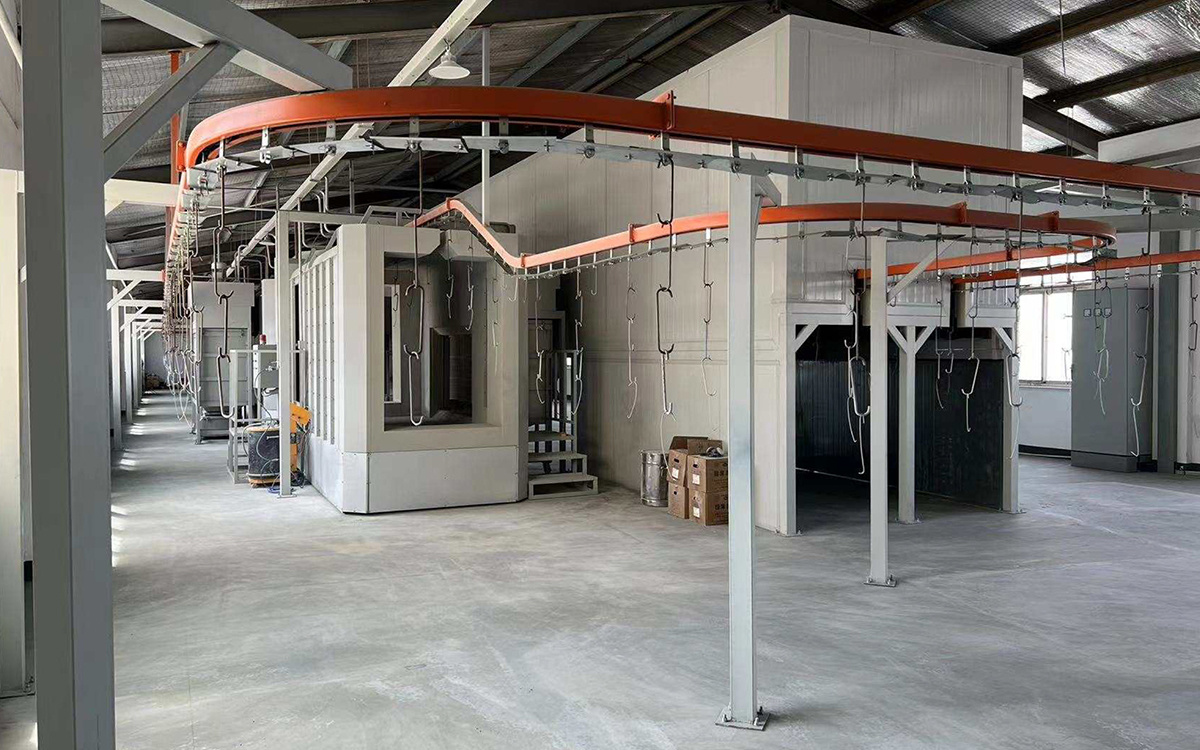
Why Is Surface Treatment Important?
Enhancing Product Performance:
Surface treatment can enhance key properties of materials such as corrosion resistance, wear resistance, and electrical conductivity, thereby extending the service life of products.
Optimizing Appearance Quality:
It can improve the surface flatness, gloss, or color of products, enhancing their aesthetic appeal and market competitiveness.
Ensuring Usage Safety:
For products in certain special scenarios, such as medical devices and food packaging, surface treatment can play roles in disinfection and anti-contamination, ensuring the safety of users during usage.
Facilitating Subsequent Processing:
Appropriate surface treatment (e.g., phosphating of metal surfaces) can improve the quality and efficiency of subsequent processing (e.g., coating, welding) and reduce production costs.
How to Choose Surface Treatment for Your Sheet Metal Products
A comprehensive consideration of the following factors is required when selecting an appropriate surface treatment method for sheet metal products.
●Base Material
In the custom sheet metal processing industry, materials such as steel, stainless steel, aluminum, and galvanized sheet are commonly used; however, different materials are compatible with different processes.
●Service Environment
Indoor, outdoor, coastal, and chemical environments. The environment in which the product is used determines the required level of protection.
●Functional Requirements
Is electrical conductivity needed? Insulation? Wear resistance? Anti-fingerprint property?
●Appearance Requirements
Color, glossiness (high gloss, matte), texture (smooth surface, sand texture, wrinkle texture, etc.).
●Budget
There is a significant cost difference between different surface treatment processes. The budget will directly restrict the range of process options.
It is necessary to select the most cost-effective solution on the basis of meeting the product's performance and appearance requirements.
Overview of Surface Treatment Methods
Cleaning & Pre-treatment
It is directly related to the bonding state between the coating and the substrate surface, and the strength of coating adhesion is precisely one of the core indicators for measuring the effectiveness of surface treatment. To achieve a high-quality surface finish, this step is particularly crucial.
●Degreasing
Removal of oil residues left during stamping and processing; common methods include alkaline solution cleaning, organic solvent cleaning, and ultrasonic cleaning.
●Pickling
Removal of oxide scales, rust, and minor impurities from the metal surface using acid solutions (e.g., sulfuric acid, hydrochloric acid).
●Phosphating
Formation of a porous phosphate crystal film on the surface of steel parts via chemical methods. Its main functions are to improve coating adhesion and enhance rust resistance, and it is often used as a pre-treatment for painting.
●Passivation
Primarily applied to stainless steel, the process involves removing free iron ions from the surface using solutions such as nitric acid, promoting the concentration of chromium oxides to form a dense passive film, which can significantly enhance its corrosion resistance and prevent surface rusting.
●Sandlasting/Gritblasting
Using high-speed abrasive grains or small steel balls to impact the surface of sheet metal parts.
Its functions are:
-Rust removal and oxide scale removal;
-Increasing surface roughness to greatly improve coating adhesion;
-Relieving stress; and enhancing the appearance (e.g., matte effect).
Electrochemical Treatment
●Electroplating
Through the principle of electrolysis, a layer of metal or alloy coating is deposited on the surface of the workpiece.
-Zinc Plating:
The most commonly used and economical anti-rust method for steel parts; the appearance is silvery white or colored (after color passivation). After passivation, options such as blue-white, color, and black are available.
-Nickel Plating:
It has a silvery-white appearance with a slight yellow tint, featuring good decorative properties, wear resistance, and corrosion resistance. It is often used as the underlayer for chrome plating and can also be used alone.
-Chrome Plating:
Divided into decorative chrome (bright, aesthetic, and wear-resistant) and hard chrome (extremely hard and highly wear-resistant, used for mechanical components).
-Tin Plating:
It has good weldability and corrosion resistance, and is widely used in electronic components.
●Anodizing

Mainly used for sheet metal parts of aluminum and aluminum alloys. A hard and porous aluminum oxide film is generated on the aluminum surface through electrolysis.
Advantages:
Greatly improves corrosion resistance, wear resistance, and hardness;
The porous structure can absorb dyes to achieve various colors (black, gold, red, etc.), with extremely strong decorative properties;
Divided into ordinary sulfuric acid anodizing and hard anodizing (the film layer is thicker and harder).
●Electropolishing
By electrolytically dissolving the tiny protrusions on the metal surface, the effect of making the surface smooth and glossy is achieved.
It is particularly suitable for stainless steel and aluminum materials, capable of producing a nearly mirror-like effect and improving corrosion resistance.
Chemical Conversion Coating
●Chromate Conversion
A chromium-containing compound conversion film is formed on the metal surface through chemical action, which can effectively improve corrosion resistance and has certain decorative properties. It was once widely used in surface treatment of various metals, but its application is now limited due to environmental protection requirements.
●Chromate-Free Passivation
Developed to replace chromate treatment, it contains no chromium components. It forms a passivation film through chemical reactions, providing rust resistance and improving coating adhesion. It meets environmental protection standards and is suitable for scenarios with environmental protection requirements.
●Iron/Manganese Phosphating
A type of phosphating treatment that forms iron or manganese-based phosphate crystal films on steel surfaces. Its main functions are to enhance rust resistance and coating adhesion. Iron-based phosphating films are relatively thin, while manganese-based phosphating films have better hardness and wear resistance, making them suitable for applications with different protection requirements.
Coating
●Powder Coating
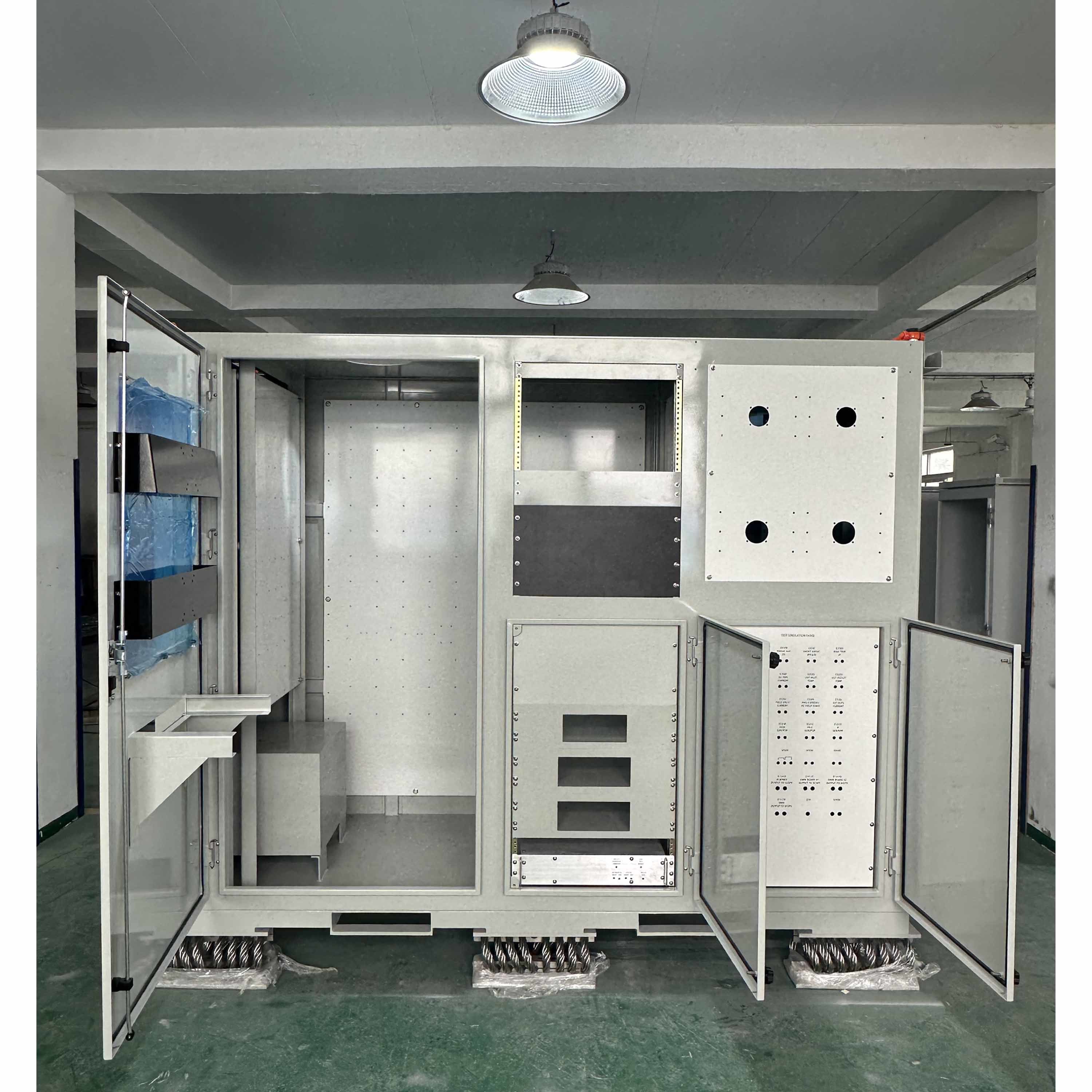
Principle: Dry plastic powder is adsorbed onto the workpiece surface via electrostatic action, followed by high-temperature baking to cure and form a coating.
Advantages: Thick coating, excellent durability, superior mechanical properties, an extensive range of color and texture options (such as smooth, sand, and wrinkle textures), environmental friendliness, and high cost-effectiveness.
Applications: It is currently the most mainstream and popular surface treatment method for products like metal enclosures, communication cabinets, and outdoor equipment.
Click to learn more about our Powder Coating Capabilities.
●Painting
Advantages: Capable of achieving more complex color effects (e.g., gradient colors) and allowing for very thin coatings.
Types: Including acrylic paint, polyester paint, fluorocarbon paint (with excellent outdoor weather resistance), etc. It can be applied via manual spraying, automatic spraying, etc.
●Electrocoating,E-Coat
Principle: Similar to electroplating, but the deposited material is water-based paint. The workpiece is immersed in a paint tank as an electrode, and direct current is applied to make the paint uniformly adhere to the entire workpiece surface.
Advantages: Excellent coverage with no dead angles, ensuring even coating in gaps; extremely strong corrosion resistance, and it is usually used as a primer.
Mechanical Treatment
It is mainly used to modify surface texture or state and gener·ally does not provide anti-corrosion protection.
●Brushing
Linear patterns are formed on the surface through mechanical friction, which serves to enhance aesthetics and resist minor scratches.
●Polishing
Mechanical or manual methods are employed to achieve a smooth, mirror-like surface finish.
●Grinding
Burrs and weld scars are removed to ensure the surface integrity.
Mechanical Treatment
●Screen Printing
Printing logos, marks, instruction texts, etc., on the surface of workpieces.
●Laser Marking
Using laser to permanently mark information such as serial numbers, QR codes, and patterns.
●Sandblasting
It can be used either as a pre-treatment or to achieve the final finish, resulting in a uniform matte surface.
●Anti- Fingerprint,AFP
Typically applied to stainless steel or galvanized sheets, a hydrophobic and oleophobic coating is applied to prevent fingerprint marks from being easily left.
Conclusion
This article provides a comprehensive overview of the surface treatment technologies involved in the custom sheet metal processing industry.
Ranging from basic pretreatment methods such as sandblasting and phosphating, to protective and decorative processes like spray painting and electroplating, and further to anodizing for special materials as well as passivation that meets hygiene requirements, it almost covers all the surface treatment methods needed for various sheet metal parts in the industry from initial processing to the finished product stage.
These technologies are not only related to the stability of product performance but also determine the appearance quality and market competitiveness of products.
If you’re looking to optimize your sheet metal parts’ surface treatment processes or need tailored solutions for your specific projects, reach out to our team today!!!
NEXT:



E-mail:Sales@innometalfab.com
Whatsapp: +86 18624351618
Add:Yangquanzi Village, Gezhenpu Town, Ganjingzi District, Dalian, Liaoning

Request Quote